Open, Fast, Affordable Communications for Everyone
Good morning Mr. Kushnick,
Responses to your questions are posted below your original questions, and will be posted on the CIO/OFT website as well.
Have a great day!
Chad Smith
Contract Management Specialist
CIO/OFT Division of Telecommunications
This e-mail, including any attachments, may be confidential, privileged or otherwise legally protected. It is intended only for the addressee. If you received this e-mail in error or from someone who was not authorized to send it to you, do not disseminate, copy or otherwise use this e-mail or its attachments. Please notify the sender immediately by reply e-mail and delete the e-mail from your system.
From: Bruce Kushnick [mailto:[email protected]]
Sent: Thursday, January 17, 2008 3:31 AM
To: oft.sm.counsel.cpo
Subject: questions for the broadband grant
NOTE: We provide this email as well as submitted the questions in a word document. “THE BROADBAND OPPORTUNITY PLAN FOR NEW YORK STATE”
Submitted by Bruce Kushnick, New Networks Institute and Teletruth, on behalf of the Open Infrastructure Alliance. (OIA)
CONTACT: Bruce Kushnick, [email protected] 718-238-7191
Questions for New York State:
Open Infrastructure Alliance (OIA), is a group of some of America’s leading experts in broadband, Internet, wireless, as well as regulatory, legal and implementation issues. Will be proposing a practical, real world, multifaceted research and implementation plan to fund, without raising new taxes or even matching funds, the state’s stated goal — to deploy to ALL New York state citizens and businesses 100 mbps services to urban areas, (potentially 1 gigabit) and 20 mbps in rural areas (or higher), not to mention underserved areas, by 2015. These services would be open to all competitors. We are also proposing to create in New York State new areas of economic development using the Governor’s broadband initiative.
We have 2 sets of questions:
Baseline Requirements and Rational for Data Development:
The actual cost of deploying 100 mbps services (or higher) to the entire state will be $10-$20 billion dollars. This requires not only changes to existing laws, but a large amount of data to be created as a ‘baseline’ as to what is and is not available today, what are customers currently paying, the actual costs to offer services, not to mention the current plant and location of the wiring, etc.
Broadband is currently (and in the future) not sold as a standalone product but includes at least 5 different product areas — Local, long distance, connection to the Internet (ISP), broadband-DSL (faster pipe), and cable/video services, each with their own cost models, usage, suppliers, etc. A strong business model requires an understanding of both the user side as well as the cost of offering these services, not to mention the requirements of the current infrastructure as well as upgrading existing plant, and regulatory and legal issues surrounding the current infrastructure and use as starting points
CIO/OFT Response: This response is applicable to the questions you have asked regarding the telephone (local exchange) companies and the franchised cable television companies currently operating in New York State. The CIO/OFT does not have this information at the present time and we are beginning to work with the incumbent service providers to voluntarily provide this data. We also want to better understand their pricing models and service delivery costs…as well as what they consider to be impediments insofar as expanding their footprints and opening their facilities to third-party providers. With the exception of the latter, this information is proprietary and the CIO/OFT is developing the necessary safeguards to ensure each service provider’s information is protected from their competitors so they are comfortable sharing the data with us. The CIO/OFT will develop a provider-neutral map of NYS identifying where broadband gaps currently exist. We recognize the difference between accessibility and affordability…and plan to identify solutions to both problems.
Does the state have the following information, or should OIA create separate grants to create this data?
(We note that the phone companies’ regulatory, technology deployments, customer services, have different treatment than cable companies.)
1) Technical: Wiring and Plant.
Does the state have a map of all current incumbent wiring plans, including
2) Customer side (by carrier)
The price and usage by customers of
3) Cost models
The costs to offer local phone service (business and residential.) including
(We note that the cable companies’ regulatory, technology deployments, customer services, have different treatment than phone companies.)
1) Technical: Wiring and Plant.
Does the state have a map of all current incumbent wiring plans, including
2) Customer Side (by carrier)
The price and usage by customers of:
3) Cost Models
the costs to offer local phone service (business and residential.) including
Legal and Regulatory Baselines.
FILING REQUIREMENTS:
Part ONE:
CIO/OFT Response: We cannot answer your question because the Broadband Grant Program RFP was not released via a “distribution list.” It was announced in a press release/press conference by Governor Spitzer on December 6. The RFP was also advertised in the NYS Contract Reporter (beginning on December 10). Both announcements directed interested parties to our website (www.oft.state.ny.us) from which the RFP could be downloaded or the interested parties could request that a copy of the RFP be mailed to them by contacting our office. The RFP has been publicly available since Friday, December 7, 2007.
CIO/OFT Response: This is not applicable…as explained above.
CIO/OFT Response: This is not applicable…as explained above.
CIO/OFT Response: Partnering is highly encouraged! There are requirements in the RFP that could make it difficult for a single applicant to be successful. Where these elements are beyond one organizations core strengths, they are being encouraged to partner with others in order to submit a comprehensive proposal. There are no special measures or guidelines beyond what is stated in the RFP.
CIO/OFT Response: We have committed to responding to each individual/organization submitting a question or concern during the open Question and Answer period (which closed on 1/17) by January 24, 2008. All questions and responses are being stripped of any identifying language and a generic version of the question and response are being posted on our website to benefit all potential applicants. Many questions and answers have already been posted. Please visit our website (www.oft.state.ny.us) and click on the Universal Broadband Q&A link on our “Hot News!” banner in the middle of our home page.
CIO/OFT Response: No! This is a competitive process.
Part TWO: Our Proposal and the GRANT
“The Broadband Opportunity Plan” (working outline.) — OIA, using a team of experts, will be presenting a proposal that outlines a multi-faceted, robust plan that could fund New York state’s goal to deliver at least 100 mbps (more likely 1 gigabit) services to ALL New York state residents and businesses, (lower speed in rural areas) by 2015,
It includes
CIO/OFT Response: From what you have stated above, your proposal could qualify to compete for these funds, but please be advised that the intent of the Grant Program is to provide state funding as a catalyst to encourage accessibility to and affordability of broadband services. There is a minimum $1 matching commitment by private or other governmental entities for each $1 of State grant funding applied for.
The grant states:
“A. $2,500,000 is available for distribution to facilitate increased physical access to broadband Internet services statewide. Such activities may include but shall not be limited to: research, design, implementation, operations, management and administration of programs related to infrastructure initiatives to facilitate physical access to communities and entities that lack such access.”
Our reading of this —we will provide research and implementation designs to create infrastructure initiatives as well as fund this implementation, thus provide access to customers who lack access, both short term as well as to create ubiquitous 100 mbps services.
Obviously, a successful plan to fund the state’s initiatives will also greatly help to make “available to provide equal and universal access to broadband Internet services for underserved rural and urban areas, including schools and libraries.”
The Grant:
“It is the intent of the State to seek public-private partnerships that maximize state-provided funding to the greatest extent possible with matched funds. While not mandated, the desired objective is a 4:1 match ratio, where the eligible applicant guarantees $4 will be provided for each $1 awarded by the State. Applicant commitments may be in the form of cash, in-kind goods and services or a combination of the two.”
As analysts, including experts, lawyers, et al, our matching funds will be in the form of in-kind work – i.e., work being done below normal costs, as well as marketing through our organization. Does that qualify as matching funds? Example, the ‘Broadband Opportunity plan’, part one, will be structured as a one time –report. The market value of this report is estimated $155,000 (or more as we close the details). OIA will perform this module for $40,000 thus the matching funds in-kind is 3 to 1. Other areas can have higher-ratio matching funds as many of the ‘experts’ will be working at a fraction of their normal per diem.
CIO/OFT Response: In-kind goods and services may include labor/professional services.
OIA believes that the time frame set can not be used by anyone who has to develop relationships to do matching grants from other sources. For example, approval of a grant by the state to match the research and implementation we are proposing by a 3rd party grant can not be done in a month.
It is clear that reading the other questions presented to date, we are not the only one who is questioning the State’s short timeframe.
CIO/OFT Response: While we sympathize with your request, our responsibility is to select winning grants and award contracts prior to the end of the State’s fiscal year on March 31, as such the deadline for submitting applications will not be extended.
Our proposal will call for one-time fees and ongoing fees on a ‘retainer’ basis or per diem. These expenses can not be ascertained until the acceptance of the one time report — i.e., we can not work on an implementation plan if the original report or the baselines outlined above have not been accomplished. We are assuming that the 5 year plan is based on provisioning of services and not research. We can project our costs associated with a retainer if “Part One” is done.
CIO/OFT Response: Your assumption is correct. The intent of the 5-year reporting requirement is to annually document and report increases in broadband availability, subscriber usage and other important demographics from current baselines.
Based on the state’s response, we will be submitting this plan as a plan presented as a series of modules, including ‘surveys’, research, implementation, legal and regulatory, as well as economic development modules. Are there constraints to this approach as to how many modules we submit?
CIO/OFT Response: No…there is not.
Bruce Kushnick, Executive Director, New Networks Institute
Chairman, Teletruth
We just released the first two reports in a new series, “Fixing Telecommunications”. It is based on mostly public, but unexamined, information that exposes one of the largest financial accounting scandals in American history. It impacts all wireline and wireless phone, broadband, Internet and even cable TV/video services, and it continues today with impunity.
Verizon, AT&T, CenturyLink, and other large telephone companies have been able to manipulate their financial accounting to make the local phone networks and service look unprofitable and have used this ‘fact’ in many public policy and regulatory decisions that benefited the incumbent telecommunications utilities.
American history. It impacts all wireline and wireless phone, broadband, Internet and even cable TV/video services, and it continues today with impunity.
Verizon, AT&T, CenturyLink, and other large telephone companies have been able to manipulate their financial accounting to make the local phone networks and service look unprofitable and have used this ‘fact’ in many public policy and regulatory decisions that benefited the incumbent telecommunications utilities.
In NY State, Verizon used this excuse to raise rates multiple times, stopped deploying and upgrading the fiber optic-based wired networks fiber and even stopped maintaining the copper networks with the plan to shut off the copper and force customers onto wireless. This has left most cities with deployment gaps or no upgrades at all.
Worse, it also impacts the price for wireless services, as almost all mobile data, video or calls end up riding over a wire, known as ‘special access’. These services are mostly controlled by Verizon, and in their own territories, AT&T and Centurylink (they do not compete among themselves for this business in any significant way).
Adding insult to injury, the losses were caused by the other Verizon lines of business dumping expenses into the state utility. Much of Verizon Wireless’s fiber wires to the cell towers were paid for by local phone customer rate increases.
Finally, this impacts every aspect of the FCC’s Internet Order, commonly known as Net Neutrality, which is now in court. The massive cross-subsidies between and among Verizon NY and Verizon’s other subsidies have allowed the company to control the networks and services over them, including blocking competition —which caused Net Neutrality concerns in the first place.
The FCC’s Big Freeze—15 Years of Regulatory Neglect:
While there are multiple questionable acts, at the core, the fact is that the losses were created, in part, by the FCC, which sets the rules about the incumbent phone companies’ accounting. Simply put, in 2001, the FCC “froze” the calculations of expenses that are used in every state, based on the year 2000 — and this freeze will continue until the year 2017. It assigns the majority of all expenses to the local phone service category. There have been no major audits or investigations by FCC nor the states for 15 years. This phrase has appeared, in one form or another, since 2000: “until comprehensive reform could be achieved”…
Civic Hall Book Day — Tuesday, April 28, 2015
NOTE: Other speakers include Susan Crawford, Astra Taylor, Allison Fine, Micah L. Sifry, and Alissa Quart — (See below)
It Is Time to Start Fixing What’s Broken with Communications in America.
With the Comcast-Time Warner Cable merger now dead in its tracks, and weeks earlier, the FCC released its new Open Internet/Net Neutrality decision only to be greeted by an onslaught of legal challenges that will continue for years, The Book of Broken Promises emerges to expose the sad truth about communications services in America and to answer a fundamental question — How did we get into this mess and what can we do to fix it today?
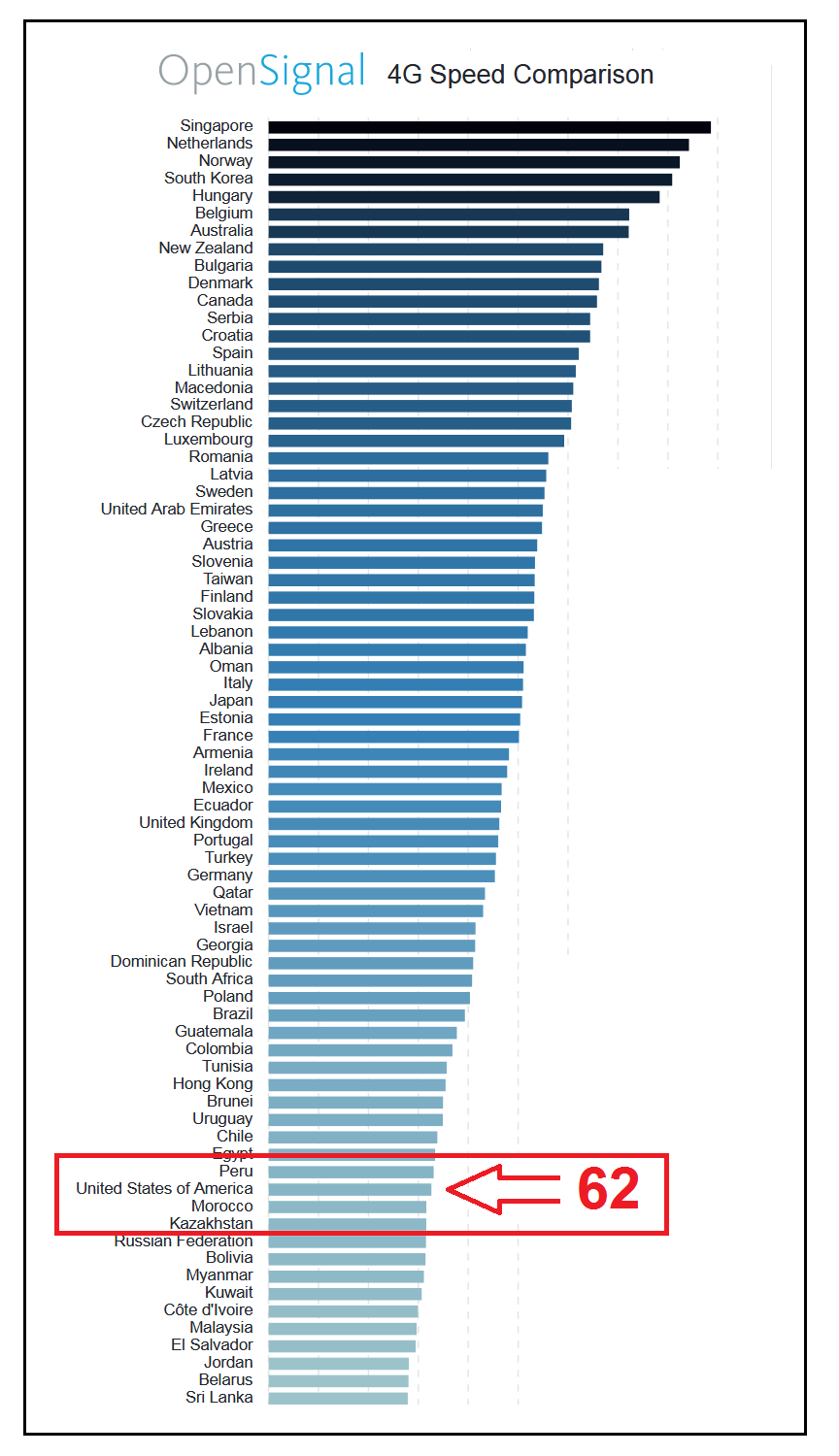
Bruce Kushnick, author, senior telecom analyst and industry insider, lays out, in all of the gory details, how America paid over $400 billion to be the first fully fiber optic-based nation yet ended up 27th in the world for high-speed Internet (40th in upload speeds). But this is only a part of this story.
It is Time for Audits, Investigations, Accountability, Oversight, Enforcement, Un-Manipulated Data, Transparency and Ethics.
Everyone Gets Upgraded: How Do We Get There? Broken Promises provides extensive documentation and a proactive plan, a road-map on how states and cities can take advantage and leverage the companies’ failed broadband commitments and the companies’ questionable financial and business practices. The goal — Move America to an open, very fast, fiber optic-based, yet affordable, broadband, Internet, and cable service for everyone — since everyone paid for it over and over and over.
Check Out the Details: The Book of Broken Promises is the third in a trilogy spanning 18 years. See the Fact Sheet, Table of Contents, details of “$200 Billion Broadband Scandal” featured on Bill Moyer’s PBS “The Net at Risk”, in 2006 (with over 730,000 downloads) and “The Unauthorized Bio of the Baby Bells”, (with Foreword by Dr. Bob Metcalfe), published in 1998.
NOTE: WE ARE ALREADY WORKING ON CHANGE
Broken Promises is based on over 20 years of research and analysis. However, it is not just a history book; it has been enhanced by the work of New Networks Institute’s team of independent experts, analysts, auditors and lawyers who have been working on projects together over the last decade.
From helping to get communities upgraded to fiber optics in New Jersey or in New York, (in 2012-2014), filing complaints at the FCC and at the state commissions, or helping to develop current and successful, settled class action suits (getting customers back tens of millions of dollars), Broken Promises uses this wealth of expertise to create an active guide for real change and it documents, in detail, the reasons why fixing communications is now an imperative.
New Networks’ Current Activities:
Want to be part of the change? [email protected]
==============================================================
Civic Hall Book Day — Tuesday, April 28, 2015
156 Fifth Avenue, Second Floor, New York City
Other authors and speakers include: